Unlocking "Nano Banana": How to Build an AI Powered App from prompt to production
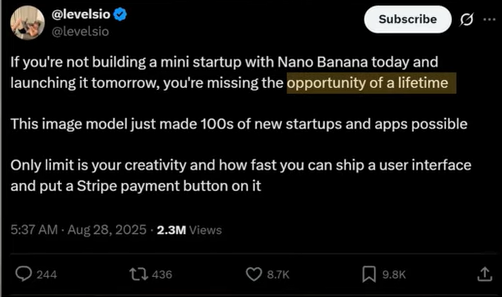
Google just dropped "Nano Banana," an AI model so capable that the tech corner of Twitter including Peter Levels is calling it the opportunity of a lifetime.
The hype is justified. This isn't just another image generator; it is a high-fidelity reality engine. But there is a massive problem that most people ignoring the hype cycle aren't admitting:
To actually use this breakthrough model, you usually need to be an engineer.
Most people cannot code. They see the magic, but they can't touch it. They have the ideas, but they lack the execution.
We are going to show you how to bridge that gap.
Watch Video Guide here:
<iframe width="560" height="315" src="https://www.youtube.com/embed/QcxjsPYKR_0" title="Nano Banana: Skip Lovable/Bolt, Build a Production-Ready App (Step-by-Step in 30 minutes)" frameborder="0" allowfullscreen></iframe>In this guide, we’re walking through exactly how we unlocked the power of Google's Nano Banana model to build a viral-ready micro-SaaS in under 30 minutes, using nothing but smart prompting and AI agents.
Here is how you turn this new model into a real business.
The Power of Nano Banana
When we set out to build this model, we made a choice. We didn’t want to create another boring utility tool or a slightly better photo filter.
In simple terms: It changes your world without changing you.
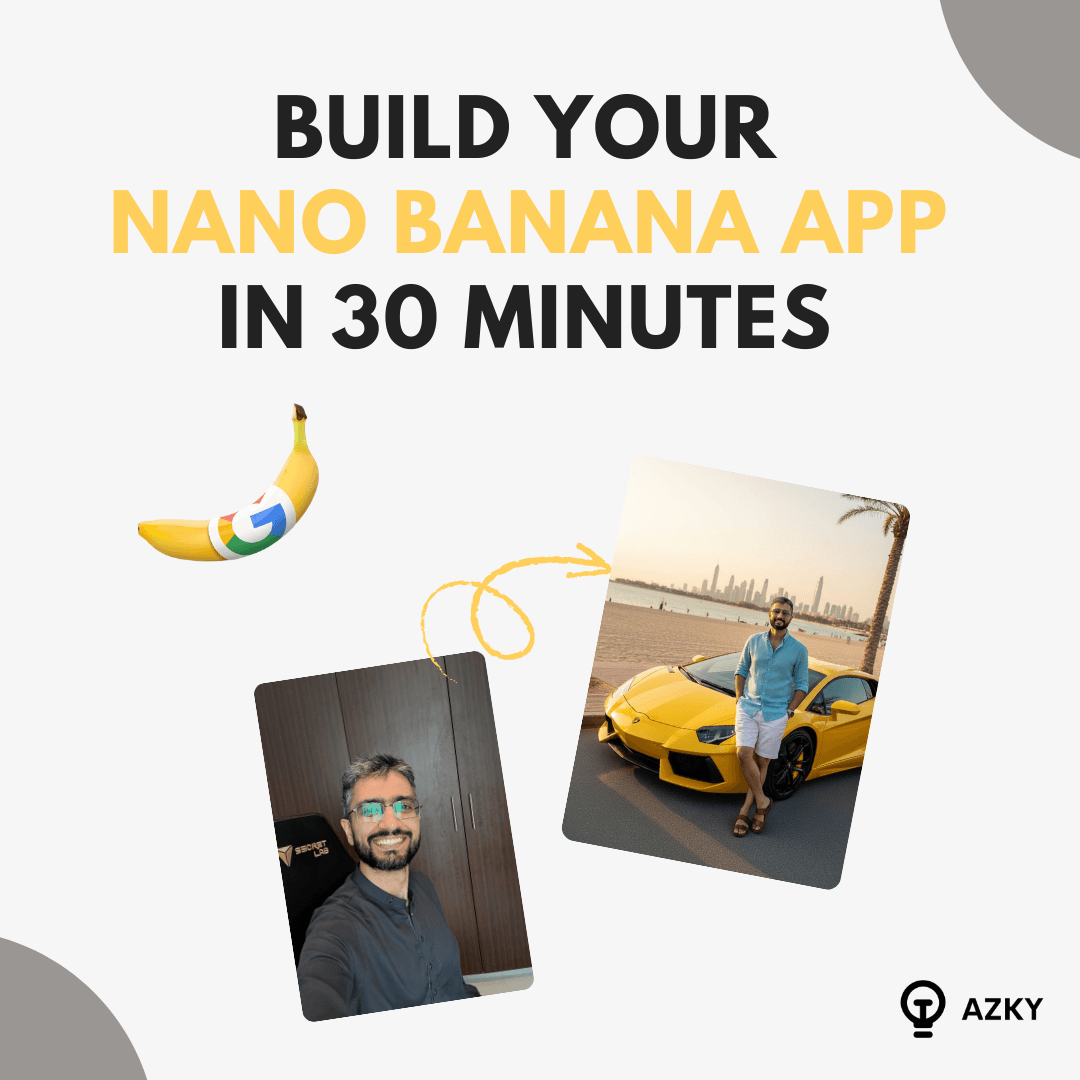
It takes your face and seamlessly integrates it into a completely new, hyper-realistic context. The lighting changes, the background changes, and the vibe changes.
Imagine a user uploading a grainy, dimly lit selfie from their bedroom. In seconds, the Nano Banana model analyzes their facial geometry and hallucinates three distinct, luxury alternate realities:
- The Desert Royal: The user is seamlessly integrated onto a camel, draped in traditional robes amidst a golden sunset.
- The Architect: The user stands confidently in front of the Burj Khalifa, perfectly lit by the city lights.
- The Tycoon: The user is leaning against a matte-black Lamborghini, looking like they just bought the dealership.
Before:

**After:
**

This isn't a filter. It’s a generative photo-shoot. And remarkably, we are going to build the entire infrastructure to run this frontend, backend, and AI integration without writing a single line of code ourselves.
1. Setting the Foundation
We start by initializing a repository in the cloud. Instead of manually writing boilerplate code, we use a single command to install our design system: npx shadcn@latest init This ensures the app looks professional and functions responsively from the first minute.
2. The Power of a PRD (Product Requirements Document)
AI is highly efficient, but it requires clear direction. Before writing code, we generate a PRD. This document outlines:
- Core Features: Image upload, AI processing, and result display.
- Target Logic: Transforming a selfie into specific scenes (e.g., Desert Safari, Burj Khalifa).
- Technical Goals: Using Next.js and the Nano Banana model.
By feeding this PRD to our AI agent, we ensure the code aligns with our business goals rather than just generating random functions.
3. Executing the Plan
Using the "Plan-then-Execute" technique, we ask the AI agent to build the landing page and the backend routes.
- Frontend: Creating an intuitive upload area and a "loading" state.
- Backend: Connecting to the Replicate API to process images using Nano Banana.
4. Debugging and Refinement
No build is perfect on the first try. During development, we encountered minor errors regarding image objects. Instead of manual troubleshooting, we provided the error logs to the AI agent. It identified the root cause, a syntax error in the API response handling and corrected it automatically.
Deployment: Going Live
Building an app is only half the battle; it must be accessible to users.
- Version Control: We "Push" the code to GitHub to save all progress.
- Infrastructure: We connect the repository to Railway.
- Environment Variables: We securely add the API tokens so the app can communicate with the AI model.
- Scaling: We configure the server to be "Serverless," meaning costs remain at zero unless people are actively using the app.
Conclusion: A New Era of Development
We are moving away from manual syntax and toward strategic Management of AI Tools. The combination of Google’s Nano Banana and AI coding agents allows founders to test ideas, iterate on feedback, and launch products in hours rather than months. This is a framework you can use to build internal tools, B2B SaaS, or consumer apps. The barrier to entry has never been lower, but the skill set has shifted. You don't need to be a syntax expert; you need to be a Product Architect.
Ready to build your own? Contact us!
Want to discuss this?
Book a call→